
Overview
Lifecycle management helps teams keep deployments stable, auditable, and cost-aware as they evolve from testing to production.Recommended Lifecycle Stages
Launch Stage
- Select model source and cluster intentionally.
- Use naming that encodes environment or business domain.
- Validate endpoint readiness immediately after creation.
Integration Stage
- Use Use this model to copy official snippets.
- Validate endpoint behavior with real prompts before wider rollout.
Policy Stage
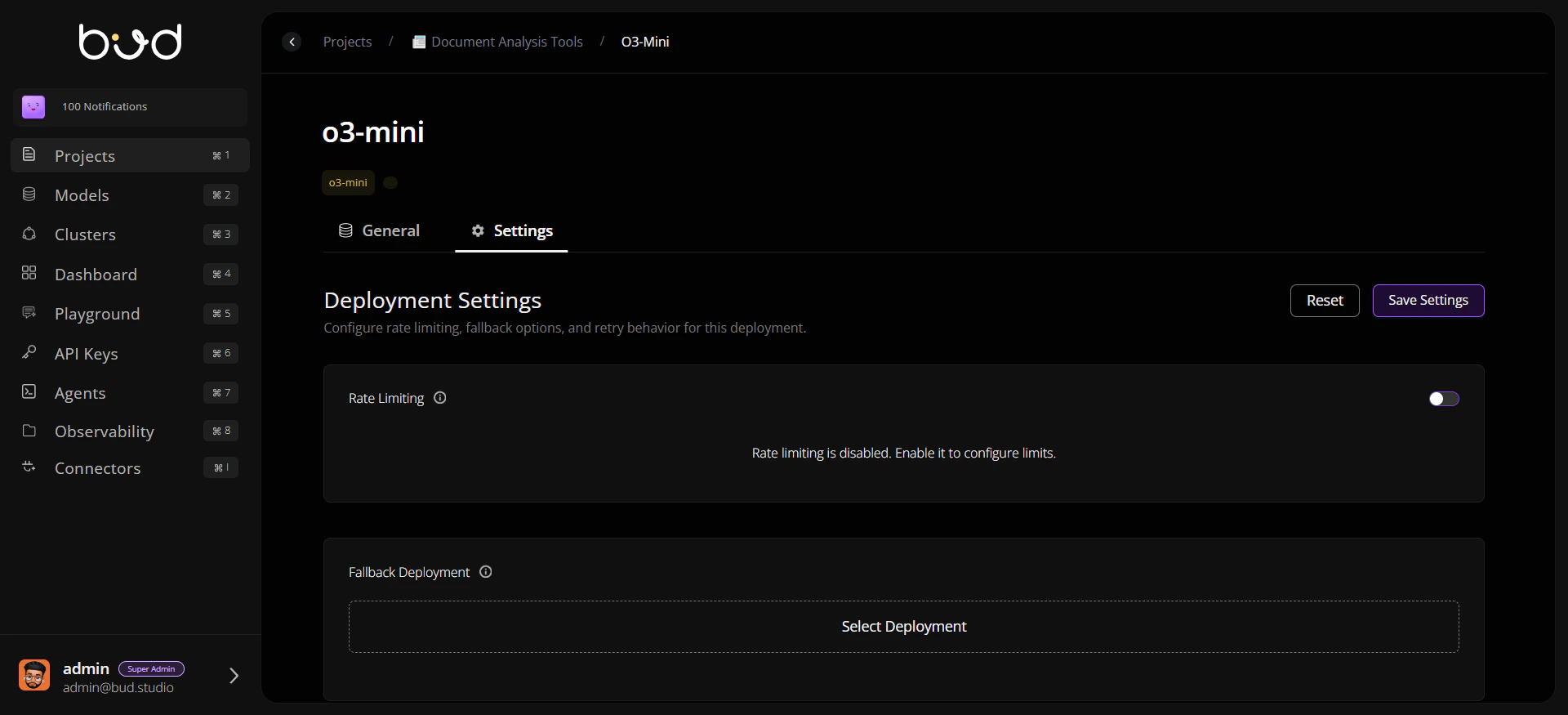
- Add rate limits aligned to expected traffic.
- Configure retries and fallback routes for resiliency.
- Re-check permission boundaries for sensitive projects.
Publish Stage (Optional)
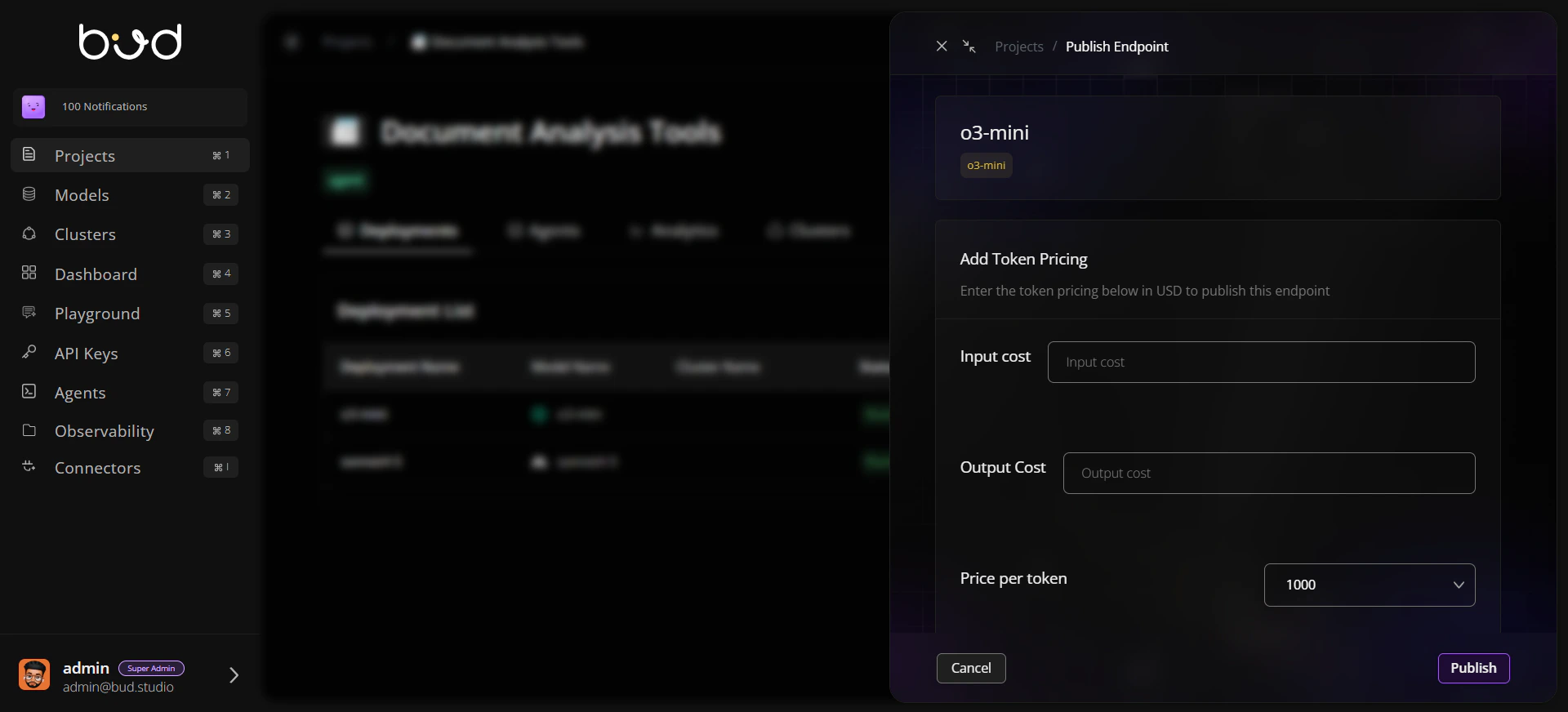
- Publish only when the model should appear in the Customer Dashboard portal.
- Attach pricing metadata for downstream customer consumption.
- Document portal-facing SLAs and usage expectations.
Operate Stage
- Track status, performance, and error trends.
- Scale workers for local deployments when demand rises.
- Re-run evaluations after meaningful model or policy changes.
Retire Stage
- Unpublish before deletion when external users consume the endpoint.
- Confirm route dependencies are removed.
- Delete only after migration to replacement endpoints is complete.